Monthly Archives: July 2026

Specialized Diverge Elite E5 Gravel Bike

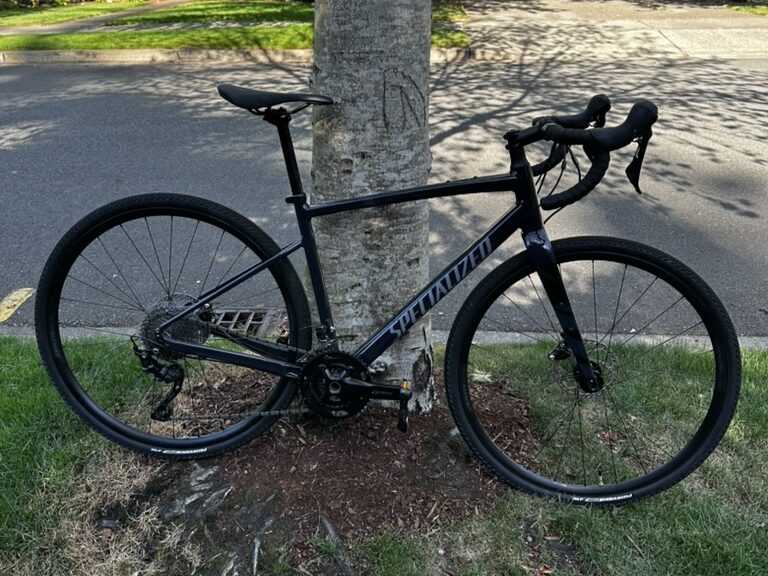
A couple years ago, Hugo received a Specialized Diverge Elite E5 gravel bike for his birthday.

If you’re wondering what a gravel bike is, they are essentially a drop handlebar road bike with large tire clearance and a slightly more relaxed geometry for comfort. I went down this option because they are in essence ‘all road’, can be ridden on the road or gnarly gravel which opens up more ride experiences and have larger gearing options to make climbing easier.

The Diverge comes in many versions, but I felt the Elite E5 was a balance point of solid features vs price for a really capable, entry level gravel bike. It has an aluminium frame, carbon fork, standard through axels to attach the wheels, flat mount disc brakes and is the first version with Shimano GRX.

There is a lot of words in that previous paragraph that might not make sense to the uninitiated:

  • Aluminium Frame – Bike frames are generally made of steel, aluminium, titanium or carbon fibre and increase in price in that order. An aluminium frame is substantially lighter than steel, not that much heavier than titanium/carbon fibre but considerably cheaper.
  • Carbon Fork – Typically the frame and fork are made of the same material, but having a carbon fibre fork is a nice upgrade for comfort as it absorb a lot of vibration/road buzz.
  • Through Axels – it uses standard sizes 100x12mm and 142x12mm that all mainstream high quality bikes use. This would enable the wheels to be swapped easily, maybe a lighter carbon wheel could be added.
  • Flat-mount Disc Brakes – like the through axels, flat mount disc brakes are a standard. It would mean you could change the brake calipers if needed to a better quality or lighter set and any modern disc brake wheel would fit.
  • Shimano GRX – GRX is Shimano’s gravel groupset & it is where the quality really starts to kick in like 105, Ultegra or Dura-Ace for road bikes. Entry level GRX has 2×10 gearing with 46-30 chainrings paired with 11-36 cassette which is good for climbing. Additionally, the disc brakes are fully hydraulic where as cheaper options might be cable actuated with hydraulic calipers or fully cable actuated.

Gravel has become a huge scene in the last 5-7 years. It appealed to me because you can explore more places, opens up additional event opportunities and while I don’t mind riding on the road with cars – gravel has none which is novel.

I asked Hugo if I could borrow his bike and he said yes, gravel here we come!
SEO Basics

Like most websites and certainly most blogs, this website is powered by the open source WordPress CMS. WordPress comes out of the box with a lot of great functionality and has a plugin infrastructure to allow the core functionality to be conveniently extended.

While WordPress default settings are generally okay to get a site to show up in Google, most websites use a 3rd party plugin to help optimize the configuration. These optimizations could include configuring meta data on each web page, generating specially formatted files to tell Google what URLs exist on a site, restricting certain URLs from being crawled or which can be indexed and a raft of other features.

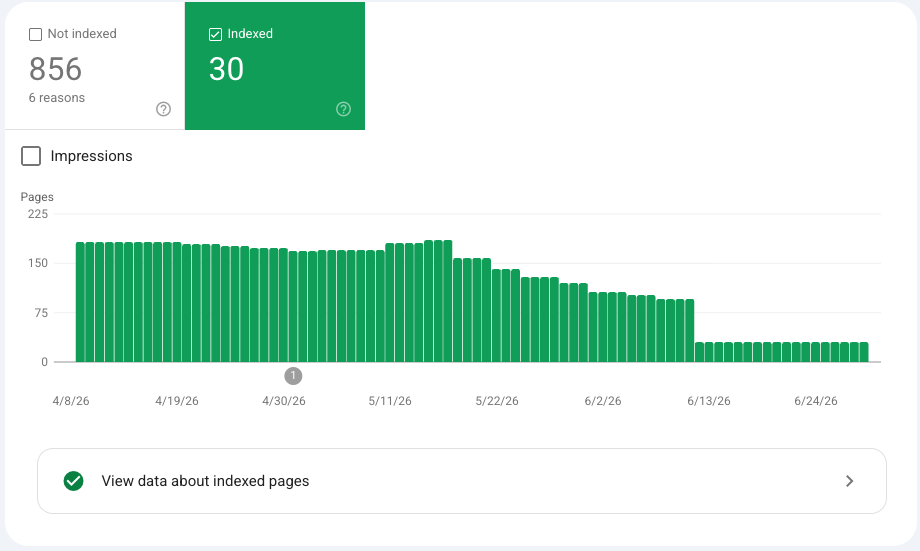
The image below is from Google Search Console for HTTP www.lattimore.id.au and shows how many URLs Google is aware of and how many are actually indexed/discoverable within search. WordPress is generating about 900 URLs in total and in the first half of the chart approximately 150 are indexed. The decline midway through is caused by switching from HTTP to HTTPS recently.

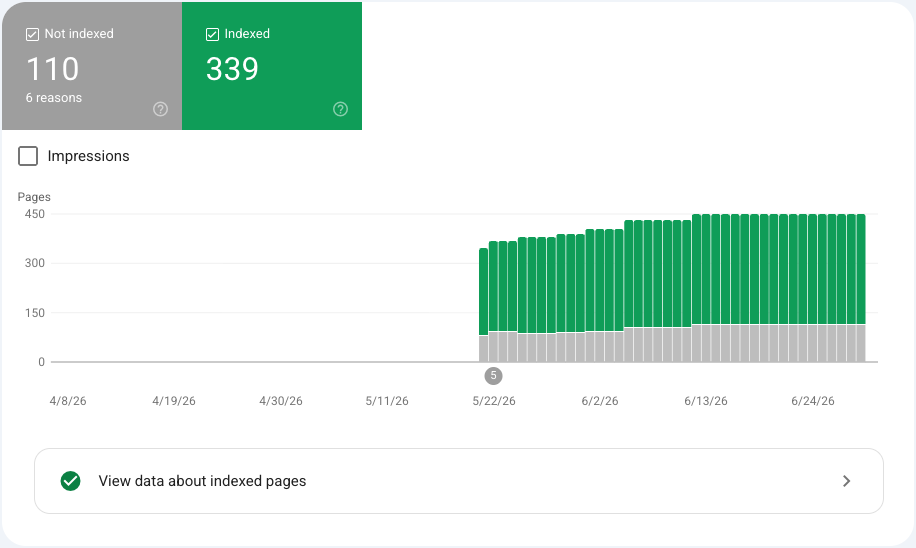
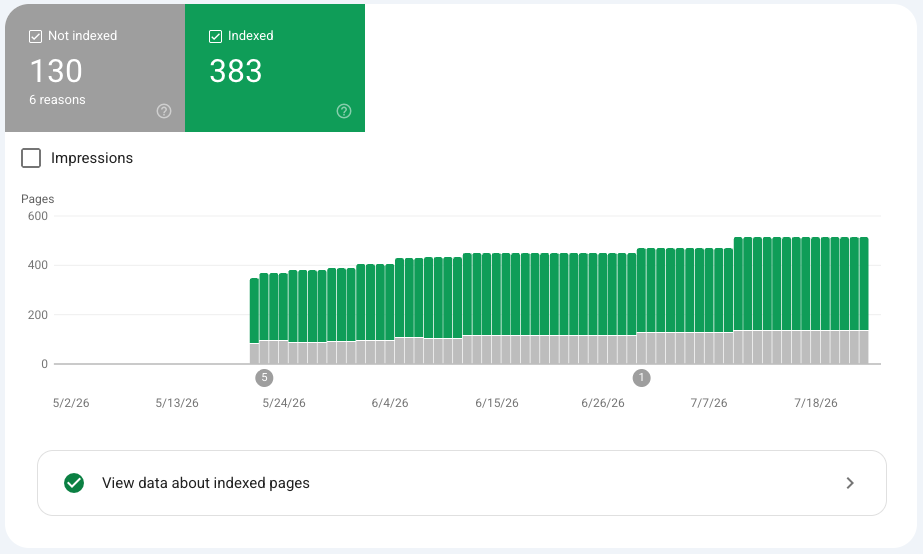
The next image is for HTTPS www.lattimore.id.au (after switching to HTTPS) and importantly after reviewing the configuration within the All In One SEO plugin.

The following changes have been made to help Google crawl/index the site more efficiently:

  • Applied noindex to date based archives (/<year>/<month>/<day>/)
  • Applied noindex to tag based archives (/tag/<tag-name>/)
  • Applied noindex to author based archives (/author/<author-name/)
  • Applied noindex to search based URLs (/?s=<query>)
  • Removed noindex from paginated category based archives (/category/<cat-name>/)

The broad based noindex changes above have cut the number of generated URLs in half, most of which were thin, low quality or broadly duplicative of other URLs in the site.

The second major change was indexing the paginated category archives, such as /category/search/2/. Before the change the top level category URLs, such as /category/search/ were indexed but pages two and onwards were noindex.

Interestingly, Google had a crawl path to the posts via the Archives link in the main menu and also each of the date based archives that were noindexed. I’m now curious if the 300+ URLs which are currently indexed remain that way in the mid/long term or if it is just short lived fame due to them being ‘new’ URLs from switching to HTTPS and it had nothing to do with deindexing the various archive type URLs above.

Only time will tell ;-)